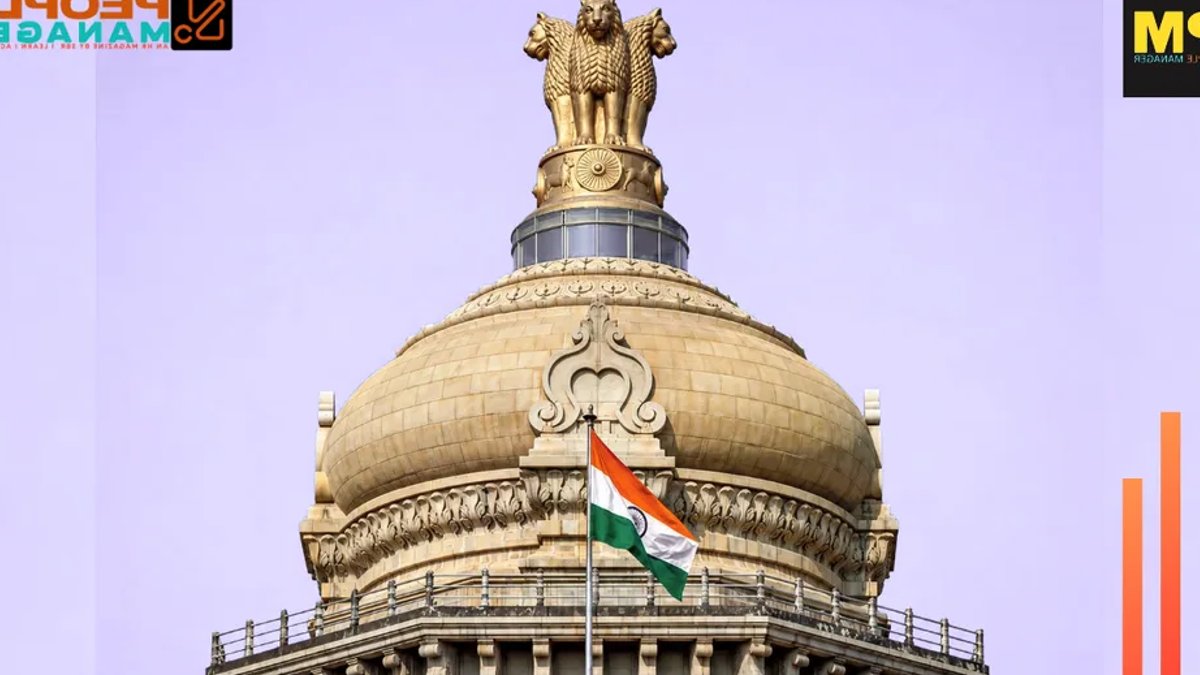
The Government of India has announced that Indian Standard Time (IST) will become the mandatory reference for all official, commercial, administrative, and digital activities beginning in 2027. This initiative, branded as “One Nation, One Time”, is expected to reshape how organisations, employers, and digital platforms manage records, transactions, and workforce operations.
The notification, issued by the Ministry of Consumer Affairs, Food and Public Distribution, introduces the Legal Metrology (Indian Standard Time) Rules, 2026, which will come into force 180 days after publication in the Gazette, placing implementation around March 2027. Under the new rules, organisations and institutions will no longer be permitted to use, display, or record any time other than IST for official purposes.
A Single Official Time Standard
The requirement spans a wide range of domains: legal and administrative records, employment and workplace documentation, commercial transactions and contracts, financial operations, public administration, transport services, and digital systems and platforms. Exceptions will be allowed only in cases where foreign time zones are explicitly identified or where alternative references are approved for scientific research, navigation, and astronomy.
For employers, the framework effectively establishes a single national time standard for HR, attendance, payroll, workforce management, and administrative functions. The government has positioned the rules not merely as an administrative reform but as a critical infrastructure measure, as modern digital ecosystems depend on precise synchronisation across multiple systems.
Sectors such as financial services and stock exchanges, telecommunications and 5G networks, digital navigation platforms, power grids and data centres, and digital payment systems require highly accurate and synchronised time references to ensure reliability and operational integrity. Even minor discrepancies in timing can disrupt transaction processing, network coordination, and system performance, making a unified national standard essential.
Read Also: EPFO Calls Employers to Settle EPF Damages Under VISHWAS
The rules confirm that the CSIR-National Physical Laboratory (NPL) will continue to maintain India’s primary timescale, UTC (NPLI), from which IST is derived by adding five hours and 30 minutes. Official time dissemination will take place through authorised channels including Regional Reference Standards Laboratories, ISRO’s NavIC navigation system, National Informatics Centre (NIC), and other government-authorised sources.
Focus on Cybersecurity and Resilience
The notification highlights growing concerns around dependence on foreign time sources such as GPS, which can be vulnerable to manipulation. To address these risks, the new framework requires time synchronisation systems to incorporate safeguards against jamming, spoofing, and cyber attacks. The government views secure and reliable time infrastructure as increasingly important for national digital resilience, especially as critical services become more interconnected.
The Legal Metrology Division will oversee implementation through periodic audits and compliance checks. Organisations that fail to comply with the new requirements could face penalties under the Legal Metrology Act, 2009, according to the notification. With the rules expected to take effect in 2027, employers, technology providers, financial institutions, and public agencies will have a transition period to align systems with authorised IST sources and ensure compliance with the new national standard.
For HR leaders and compliance architects, the adoption of IST as the sole legal reference is more than a technical adjustment—it is a strategic inflection point. Organisations must ensure that compliance records, payroll systems, and workforce management platforms are digitally aligned with IST. Employers will need to upgrade attendance and payroll software to synchronise with authorised IST sources, reducing risks of disputes over timestamps.


